
Our Blog

Best Ways to Prevent Bad Breath

June 24th, 2016

Nobody likes bad breath, and although it can sometimes be difficult to tell if you have it, it is always better to practice good oral health than risk having a smelly mouth. There are many ways to reduce or eliminate bad breath, some are definitely more effective and longer lasting than others. Check out ways to do so below.

Floss Regularly

As difficult as it can be to remember to floss regularly, when it comes to bad breath, flossing is one of the easiest and most cost effective ways to freshen your mouth. See, flossing reduces the plaque and bacteria found in areas of your mouth that a toothbrush simply can't reach, and in turn, it rids your mouth of the smell associated with that bacteria. While flossing may not eliminate bad breath on its own, if you do it along with other health oral hygiene habits like brushing, then you may just develop a fresher smelling mouth.

Use Mouthwash

Using some sort of mouthwash can really freshen up your breath, especially if you find it still smells after brushing and flossing. There is a wide variety of mouthwash products on the market, however, you can also create your own by simply using baking soda mixed with water.

Always Brush after You Sleep

Whether after taking a nap, or having a full night of sleep, you will want to brush your teeth in order to reduce bad breath. The truth is, bacteria accumulates in your mouth while you are sleeping (even during a short nap) and that is ultimately the source of bad breath. So next time you wake from a good slumber, give your mouth some brushing and you will find it makes a big difference in the freshness of your breath.

There are many ways to freshen your breath beyond just using gum or mints, the above mentioned are just a few for you to try. Test them out and you will likely find your bad breath problem is solved, or at least considerably reduced. Of course, you can always ask Dr. Kevin Mancini at your next visit to our Hampstead, NC and Jacksonville, NC office.
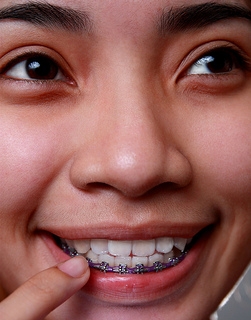

The Evolution of Braces

June 17th, 2016

Did you know that even in ancient times, people wanted to improve the look and function of their smiles? Mancini Orthodontics thinks of modern orthodontic appliances as sleek, efficient technology, but this was not always so! Take a look at the highlights in the evolution of braces.

Ancient Times: From Greece to Rome

  • According to The Angle Orthodontist, Aristotle and Hippocrates first thought about methods for straightening teeth between 400 and 300 BC.
  • The Etruscans, in what we now know as Italy, buried their dead with appliances that maintained spaces and prevented collapse of their teeth and jaws during life. Archaeologists have discovered mummified remains in various locations that have metal bands wrapped around the teeth.
  • A Roman tomb has also been discovered in which the teeth were bound with gold wire, including documentation on the wire’s use as a dental device.

18th Century: A French Development

  • The French dentist Pierre Fauchard is acknowledged as the father of modern dentistry. In 1728 he published a book that described various methods for straightening teeth. Fauchard also used a device known as a “blandeau” to widen the upper palate.
  • Louis Bourdet was another French dentist who published a book in 1754 that discussed tooth alignment. Bourdet further refined the blandeau and was the first dentist to extract bicuspids, or the premolar teeth between canines and molars, for the purpose of reducing tooth crowding.

19th Century: Orthodontics Defined

  • Orthodontics started to become a separate dental specialty during the early 19th century. The first wire crib was used in 1819, marking the beginning of modern orthodontics.
  • During this period, gold, platinum, silver, steel, gum rubber, vulcanite, and occasionally wood, ivory, zinc, and copper were used — as was brass in the form of loops, hooks, spurs, and ligatures.
  • Edward Maynard first used gum elastics in 1843 and E. J. Tucker began making rubber bands for braces in 1850.
  • Norman W. Kingsley published the first paper on modern orthodontics in 1858 and J. N. Farrar was the first dentist to recommend the use of force over timed intervals to straighten teeth.

20th Century: New Materials Abound

  • Edward Angle developed the first classification systems for malocclusions (misaligned teeth) during the early 20th century in the United States, and it is still in use today. Angle founded the American Society of Orthodontia in 1901, which was renamed the American Association of Orthodontists in the 1930s.
  • By the 1960s, gold was universally abandoned in favor of stainless steel.
  • Lingual braces were the “invisible” braces of choice until the early 1980s, when tooth-colored aesthetic brackets made from single-crystal sapphire and ceramics became popular

Today

As we arrive in the present, you need only look at your own braces to see how far we’ve come. Your treatment plan was probably created with a 3D digital model, and we’ve likely used a computerized process to customize your archwires. Perhaps you have clear aligners, self-ligating brackets, or highly resilient ceramic brackets with heat-activated wires.

Orthodontics has come a long way from the days of Aristotle, and even the bulky wrap-around braces of just 60 years ago. Regardless of your specific treatment plan, the development of high-tech materials and methods has made it possible for your orthodontic experience to be as effective, efficient, and comfortable as possible. Call our office in Hampstead, NC and Jacksonville, NC to schedule your first orthodontic consultation!

Damon Smile®

June 10th, 2016

Damon Smile braces are passive, self-ligating braces, which means they don’t need elastic o-rings to keep the wires in their desired position. This system uses small sliding doors to allow the wires to slide freely through their slots instead of the o-rings used by traditional braces.

Stops on the wires prevent them from moving out of position over time. The absence of o-rings in Damon Smile braces also allows you to maintain better oral hygiene, since o-rings can trap bacteria. These braces are suitable for both adults and children.

Construction

The first set of wires in Damon Smile braces are composed of a metal alloy that contains copper, nickel, and titanium, commonly abbreviated as CuNiTi. These wires have a curve that’s wider than your natural arch, and that allows them to apply the necessary pressure against your teeth. The wires are very thin, beginning with a diameter of 0.014 inches.

Dr. Kevin Mancini will replace this initial set of wires with a series of successively larger ones as your teeth move into their desired alignment. Your teeth will be ready for the next set of wires when Dr. Kevin Mancini can passively place them into their brackets. Heavier wire may be composed of other materials such as a titanium molybdenum alloy (TMA) or stainless steel.

Cost

Dr. Kevin Mancini and our team will determine the cost of your braces, depending on a variety of factors such as the difficulty of your case and the length of time required for treatment. Another factor that can influence the cost of Damon Smile braces is your insurance coverage. Dental insurance plans often cover orthodontic treatments such as Damon Smile braces, so you’ll need to check with your insurance provider.

Mancini Orthodontics also offers a variety of payment plans, so be sure to ask our Hampstead, NC and Jacksonville, NC team about making your orthodontic treatment with Damon Smile affordable.

Adults

Adults often use Damon Smile braces to obtain a more youthful appearance in addition to correcting specific malocclusions. The cosmetic benefits of these braces include:

  • Straighter teeth
  • Improved facial balance
  • Smoother cheek contours

Many patients with Damon Smile braces begin to see results after about ten weeks.

If you’re interested in Damon Smile braces, please contact Mancini Orthodontics and schedule an appointment!

June is National Smile Month: Show off your smile!

June 3rd, 2016

The community health awareness group Oral Health America has reported that 82 percent of adults are unaware of the role that infectious bacteria can play in tooth decay or cavities, and almost three out of five children aged 12 to 19 have tooth decay. Since June is National Smile Month, Dr. Kevin Mancini and our team at Mancini Orthodontics thought we’d remind our patients about the importance of good oral hygiene visits between office visits.

To keep your family’s smiles healthy and beautiful for years to come, be sure to:

  • Brush at least twice a day with fluoride toothpaste
  • Floss every day to clean between your teeth
  • Eat a healthy, well-balanced diet
  • Reduce your intake of sugary foods and drinks
  • Visit Dr. Kevin Mancini for scheduled appointments

If you want to know more about healthy home care habits, feel free to ask our team at your next appointment, or ask us on Facebook!